Prime Minister Narendra Modi on Tuesday shared an article highlighting that India’s water-management model is providing valuable lessons for the broader Global South, emphasizing that water security depends not only on infrastructure but also on effective planning, strong local systems, and community participation.
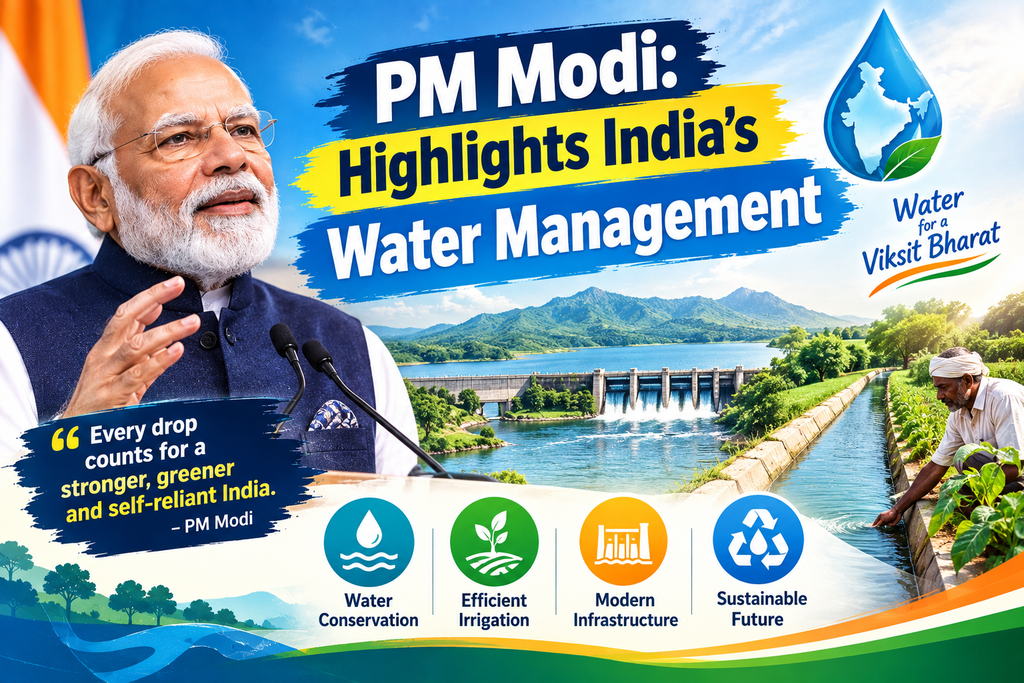
“India’s water-management model is providing useful lessons for the Global South. Water security is not limited to building infrastructure, but also involves good planning, strong local systems, and community participation in water management. India’s journey from water reforms in Gujarat to large-scale national programs offers a practical example for countries seeking to improve water management and meet growing water needs,” the Prime Minister said in a post on X.
Sharing the article titled “From India to the Global South, Gujarat’s Water-Governance Model,” Modi highlighted India’s experience in developing a community-driven approach to water conservation and management.
The article notes that India’s influence in the global water sector has grown significantly, and the country has implemented some of the world’s largest programs over the past decade to strengthen water governance, rejuvenate rivers, expand access to water and sanitation, and promote community-led water conservation, security, and enhancement.
The report traces the foundation of these reforms to initiatives undertaken by Prime Minister Narendra Modi during his tenure as Chief Minister of Gujarat from 2001 to 2014, describing this period as a testing ground for water governance reforms that were later expanded nationwide after 2014.
These initiatives provided the basis for widespread impetus for programs such as the Swachh Bharat Mission, Jal Jeevan Mission (JJM), Jal Shakti Abhiyan, Namami Gange, Atal Bhujal Yojana (ABY), and Per Drop More Crop (PDMC), all aimed at improving water availability, conservation, management, and efficient use across the country.