This study, conducted in collaboration with the Ministry of Jal Shakti, Government of India, evaluated the Atal Bhujal Yojana (Attal Bhujal Yojana) for the state of Rajasthan. Rajasthan is one of seven Indian states where this scheme is being implemented. The Atal Bhujal Yojana (Attal Bhujal Yojana) aims to mainstream community participation and inter-ministerial coordination in groundwater management.
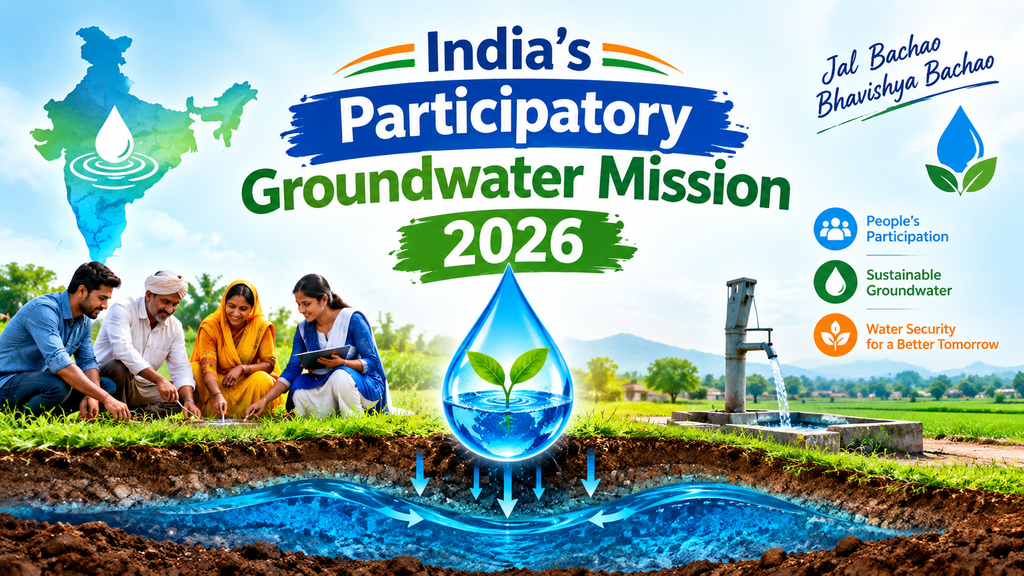
India relies heavily on groundwater to meet its drinking water and agricultural production needs, making it the largest groundwater exploiter in the world. However, its sustainability is under threat. The invisible and dynamic nature of groundwater, as well as anthropogenic and natural hazards, has made the need for community participation in managing this resource extremely important.
Based on desk reviews and fieldwork in eight of the 16 implementing districts in Rajasthan, this study includes perspectives from implementers at the state, district, and panchayat levels, including the Groundwater Department, line departments, civil society, and beneficiaries. The objective is to gather information about respondents’ knowledge of the scheme and its various components, and the factors that facilitate and hinder its implementation/utilization. By compiling this information, the scheme’s strengths, weaknesses, opportunities, and threats have been analyzed; and recommendations have been presented to strengthen implementation.
Main characteristics
- This plan has the potential to achieve the 13 Sustainable Development Goals and the 30 targets under them.
- A National Inter-Departmental Steering Committee (NISC) and a similar body at the state level have been constituted to monitor and guide the programme, comprising representatives from the Ministry of Agriculture and Farmers Welfare; Ministry of Rural Development; Ministry of Power; and Ministry of New and Renewable Energy.
- Through delivery-related indicators (DLIs), coordination between relevant departments and community participation is built into the financial structure of the scheme.
- Institutional Strengthening and Capacity Building: All Village Water and Sanitation Committees (VWSCs) were aware of the objectives of the scheme.
- DLI 1 – Public Disclosure of Groundwater Data/Information and Reports: More than 50 per cent of line departments believe that additional data can be used to better plan their respective Annual Action Plans (AWPs).